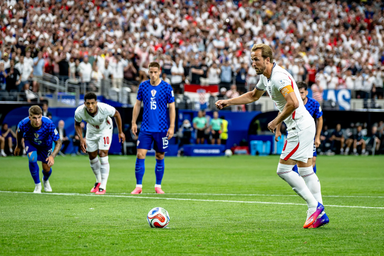


Following the conclusion of the match between Uzbekistan and Colombia, the opening round of the World Cup group stage officially draws to a close. It is safe to say that upsets were plentiful, global powerhouses encountered significant resistance, and a new landscape in world football has begun to take shape. Moving forward, the heavyweights will undoubtedly scramble to recalibrate, aiming to secure early qualification in Round 2 to minimize squad fatigue. Meanwhile, the dark horses will look to maintain their momentum and ride their fairytale runs all the way to the end.
Summary of Results: Asian Outfits Shine as the Americas Stumble
Although the performances of Asian teams slightly dipped in the final two or three groups, they nonetheless remained a standout revelation in this opening round. Few could have predicted that following the World Cup expansion, Asian teams would take center stage, raking in crucial points during Matchday 1 to seize the initiative in the qualification race.
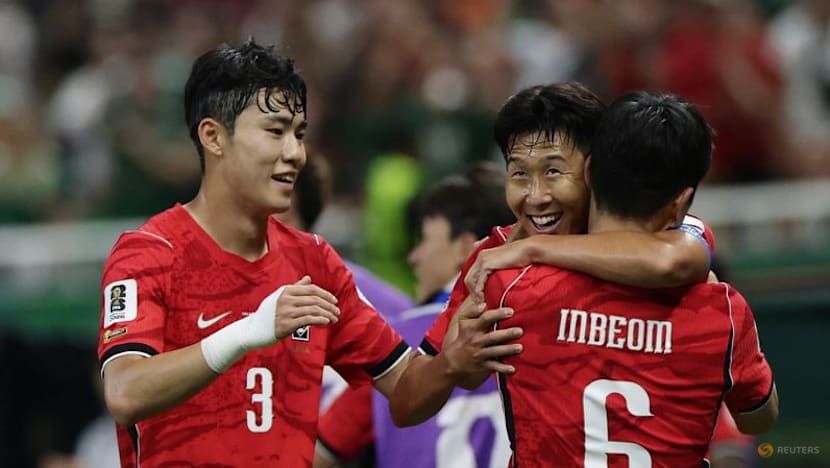
On Matchday 1, South Korea edged past the Czech Republic 2-1, followed by Matchday 3 where Qatar snatched a dramatic late equalizer against Switzerland, and Australia pulled off a massive upset by defeating Turkey. While the "Taegeuk Warriors" securing three points could be attributed to sheer merit, the latter two results were entirely unexpected. Japan then sustained their major tournament pedigree, dynamic play forcing a late equalizer to hold a formidable Netherlands side to a draw. Saudi Arabia did not disappoint either, grinding out a 1-1 stalemate with Uruguay. Although Iran's 2-2 draw with New Zealand felt like a slight stumble, walking away with a point amid complex geopolitical distractions is entirely acceptable.

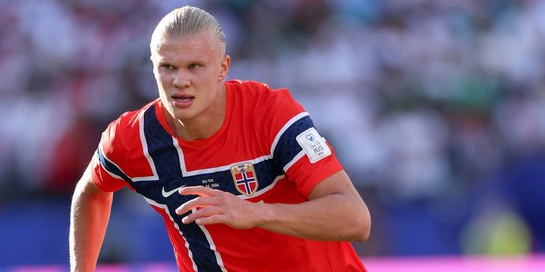
Subsequently, Iraq's 1-4 defeat to Norway was a matter of sheer helplessness, as Erling Haaland's god-tier masterclass proved simply unstoppable. Jordan's 1-3 loss to Austria boiled down to a lapse in the final 20 minutes; their lack of tournament experience cost them dearly as Marko Arnautović wreaked absolute havoc off the bench. Uzbekistan's defeat was equally heartbreaking.
In comparison, though their unbeaten streak (2 wins, 4 draws) was snapped in the latter half of Round 1, the overall performance of Asian teams far exceeded expectations. This collective exploit has secured substantial ranking points for the AFC, providing a massive boost for their long-term development.
While Asian teams celebrate their historic milestone, the teams from the Americas—particularly South America—failed to deliver. Aside from the co-hosts Mexico and the United States, along with defending champions Argentina who held their ground, the rest of the contingent stumbled to varying degrees, leaving much to be desired.

For instance, Paraguay's 1-4 capitulation saw them completely lose the fine form they enjoyed during the World Cup Qualifiers. Brazil, held to a draw by Morocco, failed to showcase the tactical identity expected under Carlo Ancelotti's stewardship. The same disillusionment applied to Haiti in their 0-1 loss to Scotland, Curaçao in their 1-7 humiliation, Ecuador falling 0-1 to the Ivory Coast, Uruguay throwing away points in a draw with Saudi Arabia, and Panama suffering a heartbreaking late defeat to Ghana. These performances were far from satisfactory, piling immense pressure on them ahead of Matchday 2.
Tactical Breakdown: The Underlying Causes
The rise of Asian teams and the regression of the American sides are inherently interconnected. Upsets defined the opening round of this World Cup, with underdogs performing significantly better on average than the traditional giants. At its core, this boils down to the flawless execution of low-block defense paired with clinical counter-attacking, which has gifted lesser teams ample tactical survival space.
First
Almost all underdogs in this tournament deployed a low-block, compact defensive strategy, relying entirely on agile, technical, and rapid players to engineer counter-attacking opportunities without overcommitting to risky, aggressive pressuring. This approach made life incredibly frustrating for the heavyweights. Spain’s 0-0 draw against Cape Verde stands as a textbook example; La Roja enjoyed total dominance and unleashed a barrage of shots, yet completely failed to break the deadlock. Cape Verde’s multi-layered low block and all-hands-on-deck defensive commitment worked to perfection.

The same narrative applied to Qatar’s late equalizer against Switzerland and Australia’s historic triumph over Turkey. They banked heavily on a collective defensive commitment, launching sudden, explosive transitions when the opportunity arose, utilizing blistering pace on the wings to carve out shooting lanes. Australia's five-man defensive line paired with Nestory Irankunda's devastating counter-attacks served as a masterclass example, leaving a possession-heavy Turkey completely clueless.
The reason underdogs dare to fully commit to such a compact defensive blueprint and strictly execute their managers' demands stems not only from tactical awareness but also from a fundamental shift in global football. Many elite teams currently lack reliable, out-and-out goalscorers—specifically, clinical No. 9 focal points. Consequently, no matter how visually dazzling their build-up play appears, they struggle to deliver the fatal blow. Ultimately, football is decided by the scoreline; without that clinical finishing edge, even the most elegant possession becomes an exercise in futility.
Switzerland, Turkey, Spain, and Portugal all fell victim to this deficiency, which mirrors a broader trend across the global game. Over the past two decades, football has undergone numerous tactical revolutions—shifting from possession dominance first, to exploiting space over the top, to prioritizing high-speed transition rates. Today, we might be witnessing the dawn of a completely new tactical meta, and the World Cup is the grand stage for its global release.
Pundits point out that the footballing world is set to return to a simpler, more pure tactical template, where physical target men (traditional No. 9s) will once again dictate matches, reminiscent of the late 20th and early 21st centuries. Evidence from this tournament confirms that teams armed with established target men or highly clinical forwards have thrived, whereas those lacking them have run into severe tactical bottlenecks.
Interestingly, Asian teams, well-aware of their lower individual technical baselines, carry zero psychological baggage when executing this pragmatic blueprint. Furthermore, because Asian squads lack absolute global "superstars," they are perfectly suited for collective warfare, defending as a singular, unified block. Even Japan, the most technically gifted side in the region, completely adhered to Hajime Moriyasu's pragmatic tactical substitution strategy. This speaks volumes about their discipline, making Asia exceptionally well-suited to thrive in this current tactical meta.
The introduction of cooling breaks has not only delighted broadcasters, who are laughing all the way to the bank, but has also handed underdogs a vital lifeline. Forcing a tactical reset midway through each half plays directly into the hands of lower-ranked teams, breaking the game's rhythm into digestible fragments and greatly favoring the physical execution of counter-attacking blueprints.

Additionally, Arsenal's domestic title-winning campaign this season provided massive tactical inspiration for many underdogs. Relying on meticulously drilled set-pieces to manufacture goals is no longer dismissed as a cheap trick, but embraced as a highly reliable, premium strategy. Armed with this, underdogs have unlocked yet another potent weapon to stifle the elite.
Heading into the second round of group fixtures, disappointed powerhouses must dissect their flaws from this exact inverted perspective if they hope to unlock these low blocks and solve their tactical crises.